
Deed Records in San Luis Obispo County
San Luis Obispo County deed records are maintained by the County Clerk-Recorder office at 1055 Monterey Street in San Luis Obispo. This office has handled property recordings since the county was created in 1850. Every deed for real estate in the county gets recorded here whether the property is in a city or unincorporated area. The database includes grant deeds, quitclaim deeds, deeds of trust, and reconveyances among other land documents. Anyone can search these records because California treats property ownership as public information. Most people search online using the Tyler Technologies portal which hosts the county database. Older paper records exist at the office for documents recorded before the digital system started. You can order copies of any recorded deed by paying the county fee schedule rates.
San Luis Obispo County Quick Facts
Clerk Recorder Services
The San Luis Obispo County Clerk-Recorder processes all deed filings countywide. Their office sits at 1055 Monterey Street Suite D120 in downtown San Luis Obispo. Call (805) 781-5080 with questions about recording or to ask about copy fees. Office hours are Monday through Friday during normal business hours.
This department handles more than just deeds. They record liens, easements, maps, and other property documents. Marriage licenses and fictitious business names also go through this office. But for real estate matters, this is the only place in the county where you can officially record a deed. Once recorded, your document becomes part of the permanent public record.
Staff will check your deed for proper formatting before recording it. Documents must have one-inch margins and space for the recorder stamp. The APN needs to appear on the first page. Signatures must be notarized. If your deed does not meet California standards, they will reject it and return it to you. Most title companies know these rules and prepare documents correctly.
County workers cannot give legal advice. They will tell you the fees and formatting requirements. They can find documents and make copies. But they cannot explain what a deed means or tell you which type to use. If you need that kind of help, hire a lawyer or work with a title company. Recording is a ministerial act under state law.
Online Deed Search
San Luis Obispo County uses Tyler Technologies for its online recording system. You can search for deeds at no charge. The database lets you search by name, document number, or legal description. Most people search by the grantor or grantee name to find all documents involving a specific person.
To search for property documents in San Luis Obispo County, visit the Tyler search portal where you can look up deed records, view document information, and order copies through the county clerk-recorder online system.
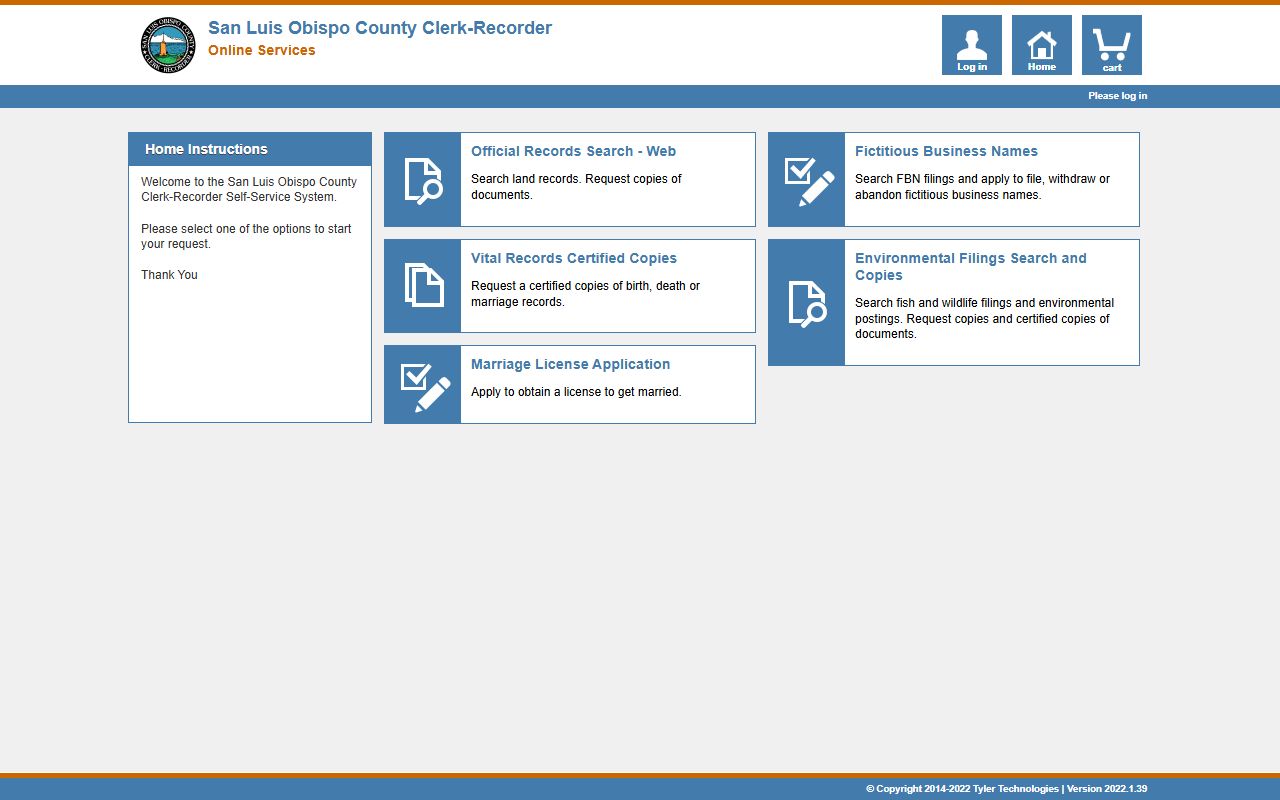
Searching is free but viewing documents costs money. You pay per page when you want to see the actual deed image. The system accepts credit cards. After payment, you can download a PDF of the document. If you need a certified copy with the county seal, that costs more and they mail it to you.
The online system may not include very old deeds. If you are researching property history going back many decades, you might need to visit the office. Bring the property address or APN. Staff can pull archived files from storage. Some historical records are only on paper or microfiche.
How to Record Property Deeds
Any deed you record in San Luis Obispo County must follow California formatting standards. Margins of one inch on all sides. A blank box at the top right of page one for the recorder stamp. The document must state the APN for the property. This is the assessor parcel number from your tax bill.
Under California Civil Code Section 1091, all real property transfers must be in writing. An oral agreement to transfer land has no legal effect. The person conveying the property must sign the deed in front of a notary public. The notary verifies their identity and witnesses the signature. Without proper notarization, the county will not record your deed.
Documentary transfer tax applies to most deeds. The rate is 55 cents per $500 of the sales price or consideration. On a $400,000 home sale, the tax is $440. Certain transactions are exempt such as gifts between family members or transfers due to divorce. The deed must show the tax amount or state a specific exemption.
You must include a Preliminary Change of Ownership Report when recording a deed. This form gives the assessor information for updating property tax records. If you file the deed without this report, you face a potential $20 penalty. The county needs this data to keep the tax rolls accurate.
Recording your deed protects your ownership interest. California uses a race-notice system under Civil Code Sections 1213-1214. The first person to record generally wins in disputes over the same property. Delaying your recording can create problems if someone else files a conflicting claim.
Recording Costs
San Luis Obispo County charges standard California recording fees. The base fee is set by Government Code Section 27361 at up to $10 for the first page. Each additional page costs $3. Added to this are mandatory state fees including the fraud prevention fee and SB2 housing fee.
The SB2 fee is $75 for most real estate transactions. This was created by the Building Homes and Jobs Act to fund affordable housing. The maximum SB2 fee is $225 no matter how expensive the property. Some transfers are exempt from SB2 such as transfers between spouses or from parent to child.
If you need copies of recorded deeds, the cost depends on whether you want plain or certified copies. Plain copies cost less and work fine for research purposes. Certified copies include the county seal and a signed statement that the copy is true and correct. Banks and courts usually require certified copies for legal transactions.
Mail recording takes longer than in-person filing. If you mail your deed, include the full fee and a stamped return envelope. Processing time varies based on how busy the office is. In-person submissions typically get recorded the same day if you come in early. Title companies often use electronic recording which is even faster.
Common Deed Forms
Grant deeds are the standard type used in San Luis Obispo County. When you buy property, the seller gives you a grant deed transferring ownership. Under California Civil Code Section 1113, grant deeds include implied covenants that the seller owns the property and has not sold it to anyone else.
Quitclaim deeds contain no warranties. The person signing just releases whatever claim they have to the property. These are common in family situations. Divorcing spouses use quitclaims to transfer their interest to the other party. Parents might quitclaim property to their children. They are also used to fix title defects like name misspellings.
Deeds of trust are not ownership documents. They are security instruments for loans. When you get a mortgage, you sign a deed of trust giving the lender an interest in your home. If you default, they can foreclose. When you pay off the loan, the lender files a reconveyance deed releasing their claim. Both get recorded in the public index along with regular deeds.
Other documents recorded here include liens, easements, and CC&Rs. Tax liens from government agencies. Mechanic liens from contractors who were not paid. Utility easements giving companies access. HOA restrictions on what you can do with your property. All of these affect title and show up in searches.
Electronic Filing Options
San Luis Obispo County accepts electronic recording through approved vendors. The California Attorney General certifies eRecording systems under the Electronic Recording Delivery Act. You can see the list of certified vendors at oag.ca.gov/erds/vendor.
Most eRecording is done by title companies and law firms. These businesses have accounts with the approved vendors. They can upload deeds and other documents electronically without visiting the office. The system is faster than paper recording. Documents usually process within hours instead of days.
Individual property owners typically cannot use eRecording directly. If you are recording your own deed, you probably need to submit it on paper by mail or in person. Ask your title company if they can eRecord your transaction for you. This option saves time and ensures your deed is recorded correctly.
Adjacent Counties
If your property is not in San Luis Obispo County, check these neighboring counties: