
San Mateo Property Records
San Mateo County deed records are maintained by the County Clerk-Recorder office in Redwood City, serving over 760,000 residents in 20 cities along the San Francisco Peninsula. You can search property ownership documents online using their RecorderWorks database system. The office is located at 555 County Center on the first floor in Redwood City where you can submit deeds in person or request certified copies. Most people search by grantor or grantee name to locate property transfers. Electronic recording is available through certified vendors for faster processing, which has become the standard method for title companies and attorneys who handle high volumes of real estate transactions. The county sits between San Francisco and Santa Clara counties in the heart of Silicon Valley where property values are among the highest in California.
San Mateo County Quick Facts
County Clerk-Recorder Office
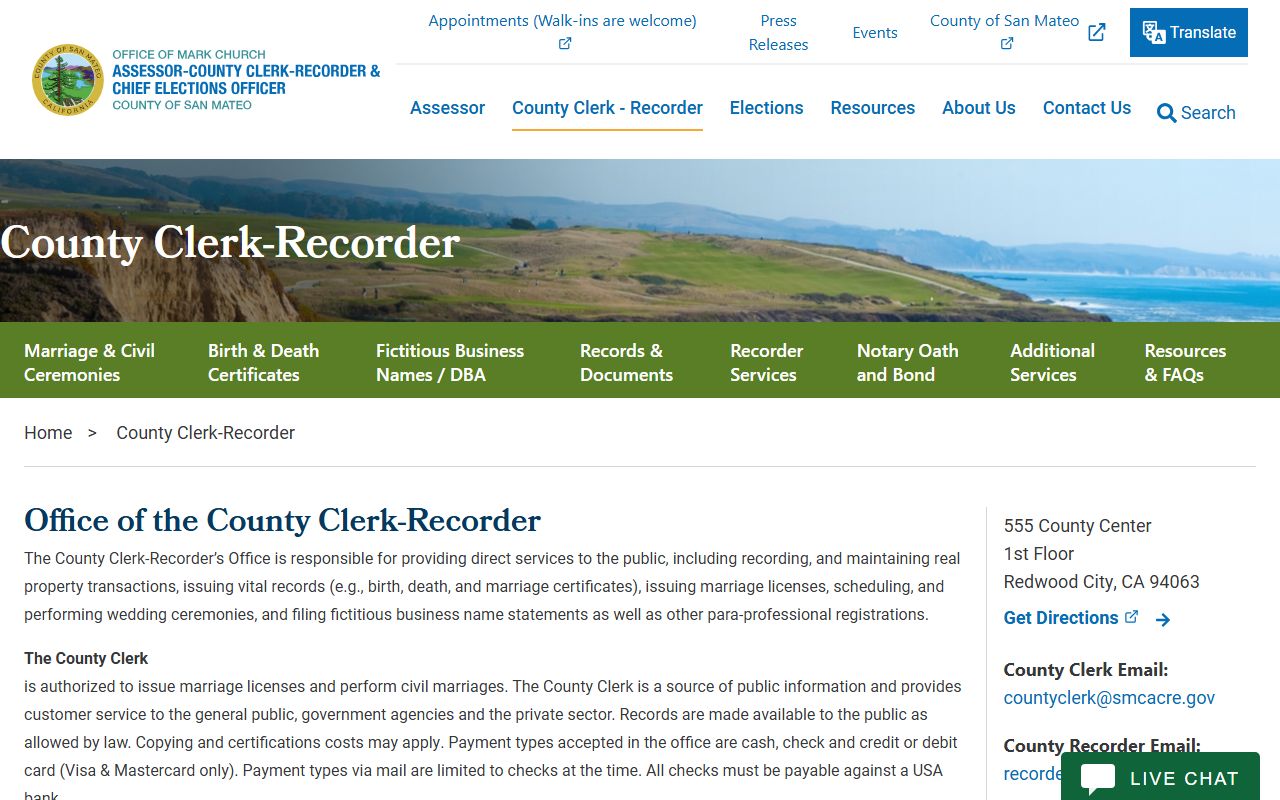
The San Mateo County Clerk-Recorder office is at 555 County Center, 1st Floor, Redwood City, CA 94063. You can contact them at (650) 363-4500 or email recorder@smcacre.gov for help with recording questions or ordering copies. Staff answer basic procedural questions but do not provide legal advice about property law or document preparation.
For information about services and recording procedures, visit the main recorder page where you can find details about fees, hours, document requirements, and links to the online RecorderWorks database for San Mateo County property searches.
The office handles all property document recordings for San Mateo County. Grant deeds, deeds of trust, reconveyances, liens, easements, and other land records get filed here. When you submit a deed, staff check that it meets California formatting standards. Proper margins, legible text, and valid notarization are required. Documents that do not meet standards get rejected and returned for corrections.
Electronic recording is widely used in San Mateo County. Title companies and law firms submit most documents electronically through certified vendors. This method is faster and more reliable than mail or in-person filing. You receive email confirmation when your document is recorded with the official recording date and document number assigned by the system.
Online Deed Search
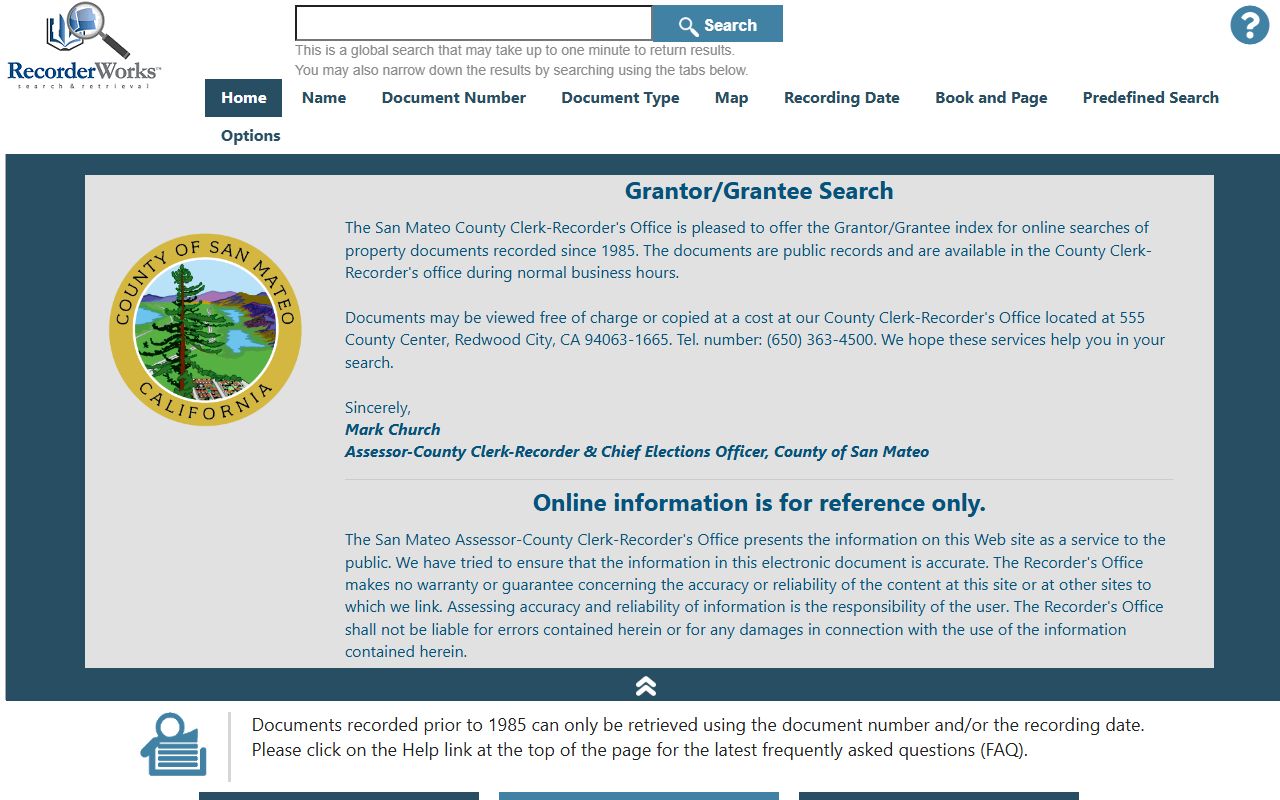
San Mateo County uses RecorderWorks software for online property searches. You can search by grantor name, grantee name, document type, or document number. The database is free to search and shows index information including recording dates and parties involved in transactions.
To access the online property database, visit the RecorderWorks system where you can search San Mateo County deed records and view document details using various search criteria like names, dates, or document numbers.
Viewing or downloading full document images may require payment. The system shows what is available and any fees before you purchase. You can order single documents or multiple copies depending on your needs. Some regular users purchase subscription access for unlimited searches and downloads.
The online database covers many years of property records. For documents recorded before the system was computerized, you may need to visit the Redwood City office in person. Historical records are on microfilm or in paper archives. Staff can help locate older deeds if you provide the property address or legal description.
Recording Costs
Recording fees in San Mateo County follow California state law. The base fee applies to the first page. Additional pages cost $3 each. The SB2 affordable housing fee of $75 applies to most residential property transfers. For higher value properties, the SB2 fee can reach a maximum of $225. A typical two-page grant deed costs around $90 to $100 to record when you add up all applicable fees.
Documentary transfer tax is 55 cents per $500 of the purchase price or consideration. This is the standard county rate. San Mateo County cities do not have their own additional city transfer taxes, so you only pay the county rate. This makes transfer tax calculations simpler compared to counties where individual cities add their own rates.
Copy fees vary depending on whether you need certified or plain copies. Plain copies are cheaper if you just need them for your own records. Certified copies include the county seal and a signed statement that the copy is a true record. You need certified copies for legal proceedings, court cases, or when submitting documents to other government agencies.
Common Deed Documents
Grant deeds are standard for California real estate sales. When you buy property, the seller gives you a grant deed. This deed type comes with implied warranties under state law. The seller promises they have not conveyed the property to anyone else. They also promise there are no undisclosed liens except those mentioned in the deed or in public records. These warranties provide legal protection for buyers.
Quitclaim deeds have no warranties. The grantor only transfers whatever interest they have, if any. These deeds are useful for family transfers, divorce settlements, or clearing title issues. If you go through a divorce and need to remove your ex-spouse from title, a quitclaim deed is often used. Always get title insurance when accepting a quitclaim deed because there are no guarantees about title condition.
Trust deeds are not ownership documents. They are security instruments for loans. When you take out a mortgage, you sign a deed of trust. This gives the lender a security interest in your property. The deed names a trustee who can initiate foreclosure if you default. After you pay off the loan, the lender records a full reconveyance to release their interest.
Other recorded documents include liens, easements, and covenants. Mechanic liens from contractors who were not paid. Tax liens from government agencies. Utility easements that let companies access your property. HOA covenants, conditions, and restrictions. All these documents create rights or restrictions that affect the property and must be reviewed during title searches.
Transfer on death deeds are a newer estate planning tool in California. You record the deed while alive but it does not take effect until you die. The named beneficiary inherits the property without going through probate. You can change or revoke the deed any time. This option works well for simple estates where you want to leave real property to one person without complications.
Cities in San Mateo County
San Mateo County has 20 cities. All property deeds are recorded at the county office in Redwood City. Below are the largest cities:
Nearby Counties
If the property is located outside San Mateo County, check these neighboring counties: